
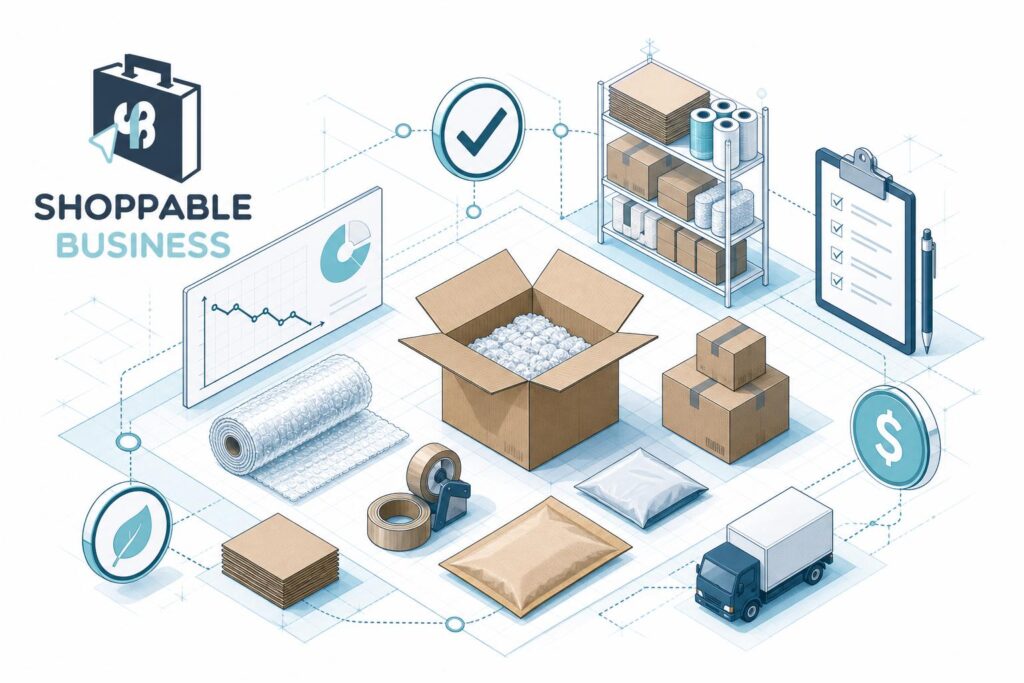
Most businesses don’t realize how much money they’re bleeding through poorly managed shipping supplies until someone actually runs the numbers. Between overstocked bubble wrap, mismatched box sizes inflating carrier fees, and emergency orders placed at premium prices, the waste adds up fast. For eCommerce brands, BPOs, and manufacturers across the Philippines shipping hundreds or thousands of parcels monthly, tightening up your shipping supplies procurement process isn’t a minor operational tweak: it’s one of the highest-ROI moves you can make. The good news? You don’t need a massive budget overhaul. You need a smarter system. Here’s how to build one, step by step, from auditing what you actually use to tracking whether your changes are working.
1. Analyzing Current Consumption and Waste Patterns
Before you change anything about how you buy packaging materials, you need a clear picture of what’s actually happening on the warehouse floor. Most companies operate on assumptions: “we go through about 500 boxes a week” or “we reorder tape when it looks low.” These guesses cost real money. A structured analysis of your current consumption reveals where you’re overspending, what you’re wasting, and which habits are costing you the most.
Conducting a Supply Audit and Inventory Baseline
Start by counting everything. Every roll of stretch wrap, every stack of mailers, every bag of void fill. Record quantities, unit costs, supplier names, and reorder frequency for each item. Then track actual usage over 30 to 60 days against what you’ve been ordering.
What you’ll typically find is eye-opening. Many companies discover they’re sitting on three to four months of certain supplies while running out of others every two weeks. This mismatch creates both carrying costs and rush-order surcharges. Your baseline should include average daily consumption rates, current stock levels, and cost per unit shipped. That last metric, cost per unit shipped, becomes your north star for measuring improvement.
Identifying Redundancies in Packaging Types
Once you have your baseline, look for overlap. Are you stocking five different box sizes when three would cover 90% of your orders? Do you have both foam peanuts and air pillows serving the same cushioning function?
Redundancy creeps in naturally over time. Someone orders a new box size for a specific product launch, and it never gets removed from the rotation. A different team member prefers kraft mailers over poly mailers and starts ordering both. Each redundancy means more SKUs to manage, more storage space consumed, and smaller order quantities per item, which kills your ability to negotiate volume discounts.
2. Strategic Sourcing and Vendor Management
Your supplier relationships directly determine what you pay, how fast you get materials, and how much flexibility you have during demand spikes. Too many companies treat supplier selection as a one-time decision rather than an ongoing strategy.
Leveraging Tiered Pricing and Bulk Discounts
The math here is straightforward: buying more at once costs less per unit. But most small and mid-sized businesses don’t consolidate their purchasing enough to hit meaningful price breaks. If you’re ordering corrugated boxes from one vendor, tape from another, and cushioning materials from a third, you’re splitting your spend across multiple relationships and losing negotiating power with all of them.
Consolidating through a single supplier on record can unlock tiered pricing you’d never reach otherwise. Platforms like Shoppable, for example, let Philippine businesses centralize procurement for shipping supplies alongside IT equipment and office materials, which means your total spend qualifies for better terms even if your packaging volume alone wouldn’t. The 30-day payment terms also help with cash flow, so you’re not tying up capital in bulk inventory purchases.
Evaluating Local vs. Global Suppliers for Lead Times
A cheaper per-unit price from an overseas supplier means nothing if it takes eight weeks to arrive and you run out in four. For Philippine-based operations, the local versus international sourcing decision hinges on three factors: lead time reliability, minimum order quantities, and landed cost including duties and freight.
Local suppliers offer faster turnaround and lower minimum orders, which suits companies with unpredictable demand. International suppliers, particularly from China or Vietnam, offer lower base pricing but require longer planning horizons. The sweet spot for most businesses is a hybrid approach: source your highest-volume, most predictable items internationally and keep local suppliers for everything else. Having an end-to-end sourcing partner that handles importation and shipping logistics can eliminate much of the complexity here.
3. Right-Sizing Packaging to Reduce Material Costs
This is where many companies find their biggest savings, and it has nothing to do with negotiating harder with suppliers. It’s about using less material per shipment by matching your packaging to what you’re actually shipping.
Minimizing Dimensional Weight (DIM) Charges
Carriers in the Philippines and globally now price shipments based on whichever is greater: actual weight or dimensional weight. DIM weight is calculated from the package’s length, width, and height. So if you’re shipping a small, heavy item in an oversized box, you’re paying for empty air.
A company shipping 1,000 packages per month in boxes just one size too large can easily waste PHP 30,000 to 50,000 monthly on DIM surcharges alone. The fix involves matching box dimensions closely to product dimensions and using adjustable or scored boxes that can be folded down. Even reducing average box volume by 15% can translate to significant carrier savings over a quarter.
Standardizing Box Sizes for Operational Efficiency
While right-sizing sounds like it requires more box varieties, the opposite is true when done well. Analyze your product catalog and identify three to five box sizes that cover 85% or more of your orders with minimal wasted space. This standardization speeds up packing times because workers aren’t hunting for the right box, reduces training complexity, and simplifies your supply ordering.
The remaining 15% of orders that don’t fit standard sizes can use adjustable packaging or custom solutions. Don’t let edge cases drive your entire packaging strategy.
Implementing Just-in-Time Inventory Systems
Holding months of packaging supplies in your warehouse feels safe, but it’s expensive. Rent, insurance, handling labor, and the risk of damage or obsolescence all eat into your margins. Just-in-time principles, borrowed from manufacturing, apply perfectly to shipping supply management.
Reducing Warehouse Carrying Costs
Industry estimates put carrying costs at 20% to 30% of inventory value annually. If you’re sitting on PHP 500,000 worth of packaging materials, that’s PHP 100,000 to 150,000 per year just to store them. For companies operating in Metro Manila where warehouse space commands premium rates, this number can climb even higher.
The goal isn’t to eliminate safety stock entirely: that’s a recipe for stockouts. Instead, reduce your average on-hand inventory to two to three weeks of supply rather than two to three months. This requires reliable suppliers who can deliver consistently within short windows, which circles back to why vendor selection matters so much.
Automating Reorder Points with Procurement Software
Manual reordering is where things break down. Someone forgets, someone’s on leave, or the spreadsheet tracking consumption doesn’t get updated. Automated reorder points solve this by triggering purchase orders when stock hits a predetermined threshold.
Modern procurement platforms can track consumption rates, predict when you’ll need to reorder based on historical patterns, and even route approvals automatically. Using a centralized procurement system like Shoppable’s platform gives you spending visibility across all supply categories, so you can spot anomalies: a sudden spike in tape consumption might indicate a packing process issue rather than genuine increased demand. This kind of budget control keeps purchasing aligned with actual operational needs rather than guesswork.
4. Integrating Sustainability into Supply Procurement
Optimizing Your Shipping Supplies Procurement Process
Sustainability isn’t just a PR play anymore. Philippine regulations around packaging waste are tightening, major retail platforms increasingly require eco-friendly packaging from sellers, and consumers notice. Building sustainability into your procurement process now avoids costly scrambles later.
Transitioning to Recyclable and Biodegradable Fillers
Traditional void fill materials like styrofoam peanuts and non-recyclable air pillows are being phased out across many supply chains. Recyclable alternatives, including corrugated paper fill, biodegradable air cushions, and mushroom-based packaging, have dropped significantly in price over the past two years.
The transition doesn’t have to happen overnight. Start with your highest-volume filler material and test a sustainable alternative for 30 days. Measure any changes in damage rates, packing speed, and cost per shipment. Most companies find the cost difference is now minimal, sometimes even favorable, especially when factoring in waste disposal savings. For brands selling on platforms like Lazada or Shopee, sustainable packaging can also become a marketing differentiator that justifies slight price premiums.
5. Measuring Success Through Procurement KPIs
You can’t improve what you don’t measure. Once you’ve implemented changes to your procurement approach for shipping materials, track these metrics monthly:
- Cost per unit shipped: your total packaging and shipping supply spend divided by units shipped
- Inventory turnover rate: how many times per year you cycle through your packaging stock
- Stockout frequency: how often you run out of a critical supply item
- Supplier on-time delivery rate: percentage of orders arriving within the agreed window
- DIM weight variance: the gap between actual product weight and the dimensional weight you’re being charged for
Set benchmarks from your initial audit and review progress quarterly. A well-run procurement operation should see cost per unit shipped decrease by 10% to 20% within the first six months of implementing the strategies above.
Don’t treat these KPIs as vanity metrics. Each one connects directly to your bottom line. A rising stockout frequency signals supplier reliability issues. Growing DIM weight variance means your box standardization is slipping. These numbers tell you where to focus next.
The companies that treat procurement for shipping supplies as a strategic function rather than an afterthought consistently outperform their competitors on margins. Whether you’re an eCommerce brand fulfilling 200 orders a day or a manufacturer shipping components across Luzon, the principles are the same: know what you use, buy it smarter, store less of it, and measure everything. Start with the audit. The savings will follow.