
Recently, my co-founder and good friend pointed out something I probably should have understood earlier: employees shouldn’t be expected to keep founder hours. Working late shouldn’t become the unspoken price of being seen as committed.
Founders choose to carry the business around in their heads, so our working day may not end at a normal hour. We might think about a problem over dinner, remember something at 10:30 p.m., and send a message before we forget it. To us, it may be a passing thought. To the employee receiving it, it can look like a request that needs an immediate response.
People can care deeply about their work without treating every notification like a call to action. If employees feel guilty for not responding to routine messages at night, that’s partly a leadership problem.
I’m not sure if you’ve experienced this in your organization, but I’m guilty of messaging my team at odd hours, otherwise I might forget the idea or task at hand. If somebody hasn’t spoken up yet and you are guilty of this, I urge you to talk to your team about it.
Technology created much of this pressure, however if used properly, it can also help remove it.
Set your quiet hours once
Turning notifications off every night sounds simple, but it depends on remembering to do it. A recurring Do Not Disturb schedule works better because it makes disconnecting automatic.

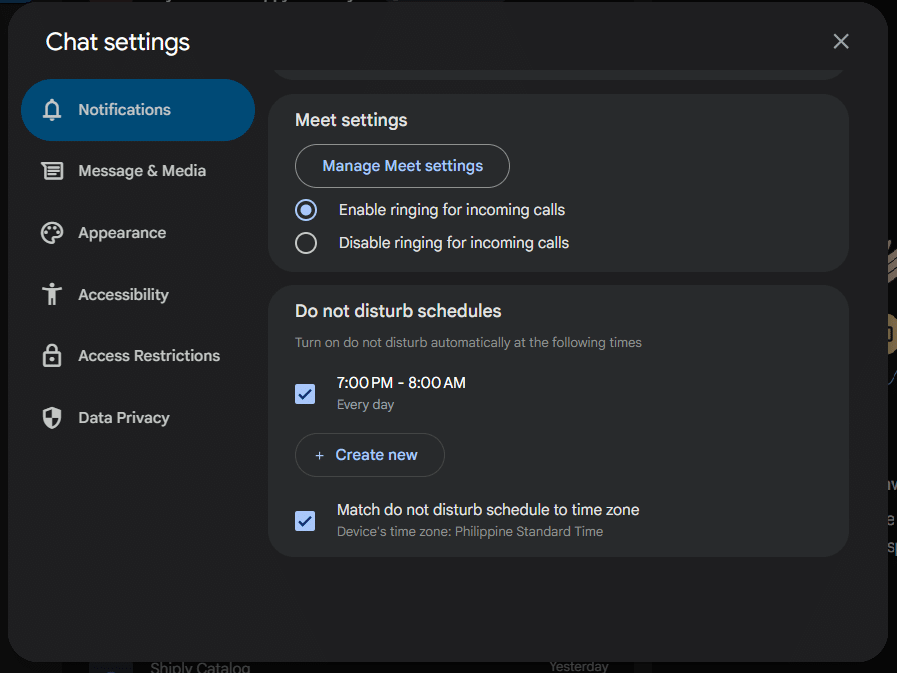
In Google Chat or Gmail, click your status, select Do not disturb, then choose Set a do not disturb schedule. You can create different schedules for different days. Google provides the full instructions in its Chat availability guide.

In Slack, open your profile, go to Preferences, and set the days and hours when notifications are allowed. Outside those hours, Slack pauses them automatically. Slack explains the available settings here.
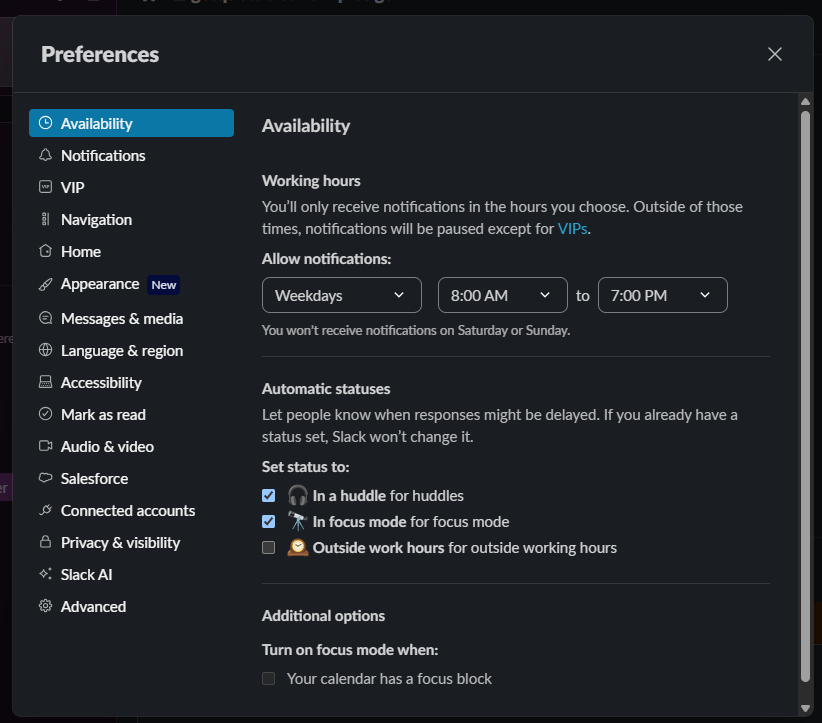
A practical schedule might allow notifications from 8:00 a.m. to 7:00 p.m. on weekdays and pause them at night and over the weekend. The right hours depend on the role, but the schedule should reflect when that person is actually expected to work.
Messages will still be waiting the next morning. They just won’t be sitting on the dinner table with you.
Let your phone be the final gatekeeper
Muting Slack or Google Chat may not be enough. Email, calendar alerts, work group chats, and other apps can still get through.
Your phone’s Do Not Disturb or Focus mode can serve as the final boundary. Schedule it to switch on after work, then allow calls only from family, selected contacts, or an approved emergency number.
This is especially useful when the same phone is used for work and personal communication. You don’t need to make yourself unreachable. You need to decide who can interrupt you and why.
People in formal on-call roles are different. Their availability, escalation process, and compensation should already be clear. Nobody should discover that they were apparently on call because a manager became annoyed the next morning.
An emergency should arrive like an emergency
A message appearing after work doesn’t automatically make it urgent.
A genuine emergency normally involves an immediate risk to safety, security, company operations, customer service, or money. It may also include a deadline that genuinely cannot move without serious consequences.
Feedback on a document isn’t an emergency. Neither is an idea for next week, a routine approval, or a question that can be answered in the morning.
Companies need a separate route for situations that truly can’t wait. That may be a phone call, text message, on-call system, or escalation through a designated manager.
If something is genuinely urgent, the company will call or use that agreed emergency channel. It should not rely on the hope that an employee happens to be checking Google Chat at 11:00 p.m.
Before responding after hours, ask:
- Am I officially responsible for handling this now?
- Has someone used the company’s emergency channel?
- Will waiting until the next working day cause serious harm?
- Can I deal with this properly when I’m rested and back at work?
If it can wait, let it wait. You don’t need to apologize for answering during your next working period.
Leaders should stop exporting their schedules
Founders and managers often work unusual hours. That doesn’t mean everyone else should inherit those hours.
If you write an email or chat at night, use Schedule send in google chat or Gmail so it arrives the following morning. Google documents the option in its Gmail sending guide and Google chat sending guide.
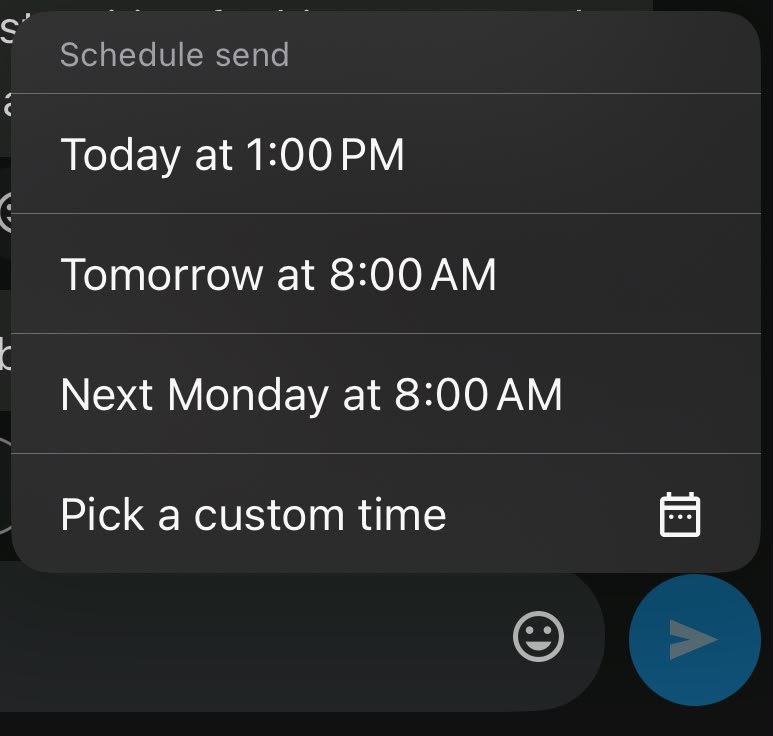
Slack also lets you schedule a message by selecting the arrow beside the send button. On mobile, press and hold the send icon. Slack’s messaging guide explains how.
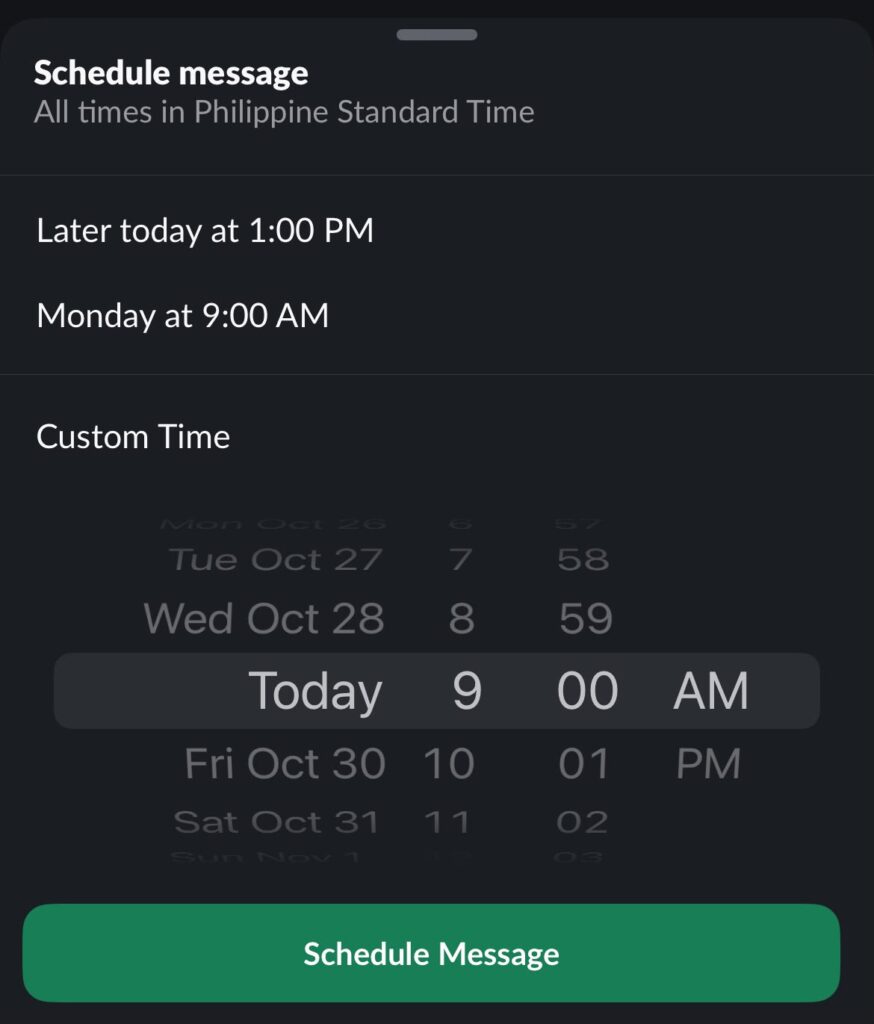
This takes only a few seconds, but it removes the ambiguity for the recipient. They no longer have to wonder whether the message can wait or whether the boss expects an answer tonight.
If a message must be sent immediately for context, say what you expect:
For tomorrow. No need to respond tonight.
Better yet, schedule it. People tend to follow the behavior leaders demonstrate, not the boundaries written in an employee handbook.
Agree on the rules as a company
Notification settings help, but they can’t fix unclear expectations by themselves. Teams should agree on a few basic rules:
- Normal chat messages and emails can wait until working hours.
- Genuine emergencies use a separate, agreed contact method.
- Employees in on-call roles know when they’re on call and what they’re responsible for.
- Leaders schedule non-urgent messages instead of sending them late at night.
- Nobody is penalized for using Do Not Disturb outside their agreed working hours.
- Make the rules an official HR policy and part of the employee handbook.
These rules give employees permission to disconnect without having to guess how their manager will react.
As founders, we may never completely switch off. That’s part of the choice we made. It doesn’t need to become the default expectation for everyone who works with us.
The rule I want people to remember is simple: if it’s genuinely an emergency, call. Otherwise, us as leaders we’ll see it tomorrow. And if we send something at an odd hour, that timing is ours, not yours.