
Are Your Stockrooms More Like Storage Rooms? It’s Time for a Change!
For any business in the Philippines, from the bustling sari-sari store to the rapidly expanding e-commerce giant, effective inventory management isn’t just a buzzword – it’s the backbone of profitability and customer satisfaction. Ever felt the frustration of running out of a popular item just when demand is high, or conversely, having shelves overflowing with products that just won’t move? These are classic signs of inventory management woes, and they cost Philippine businesses millions every year in lost sales, wasted capital, and operational inefficiencies.
This isn’t just about counting boxes; it’s about optimizing your entire supply chain, ensuring you have the right products, in the right quantities, at the right time, without tying up excessive capital. For business owners, procurement teams, finance teams, and ambitious entrepreneurs across the archipelago, mastering inventory management isn’t optional – it’s essential for sustainable growth in our dynamic market.
In this guide, we’ll dive into practical, actionable best practices tailored for the Philippine business landscape, helping you transform your inventory from a headache into a strategic asset.
Why Does Inventory Management Matter So Much for Philippine Businesses?
The unique challenges and opportunities in the Philippines make robust inventory management even more critical:
- Geographic Complexity: An archipelago nation means fragmented logistics. Shipping delays, natural disasters (like typhoons or earthquakes), and varying infrastructure can significantly impact stock levels and lead times.
- Volatile Demand: Local holidays, festivals, sudden trends, and even seasonal weather patterns can cause unpredictable spikes or dips in demand.
- Capital Efficiency: For many Filipino SMEs, capital is precious. Unsold inventory is capital stuck on shelves, not generating revenue. Efficient management frees up cash for growth, marketing, or other critical investments.
- Perishable Goods: Businesses dealing with food, flowers, or other time-sensitive products face additional pressure to move inventory quickly to avoid spoilage and losses.
- Customer Expectations: Filipino consumers are increasingly discerning. They expect product availability and timely delivery, especially with the rise of e-commerce.
The Pillars of Effective Inventory Management: Best Practices to Adopt
Let’s break down the core strategies that can revolutionize your inventory operations:
1. Centralize Your Data and Embrace Technology
Gone are the days of manual spreadsheets and guesswork. The first step to streamlining is gaining a clear, real-time picture of your inventory.
- Inventory Management Systems (IMS): Invest in a robust IMS, or an Enterprise Resource Planning (ERP) system with strong inventory modules. These systems track stock levels across all locations, manage orders, process returns, and provide valuable data insights. For smaller businesses, cloud-based, subscription-model IMS are increasingly affordable and user-friendly. Look for solutions that integrate well with your POS (Point-of-Sale) system or e-commerce platform.
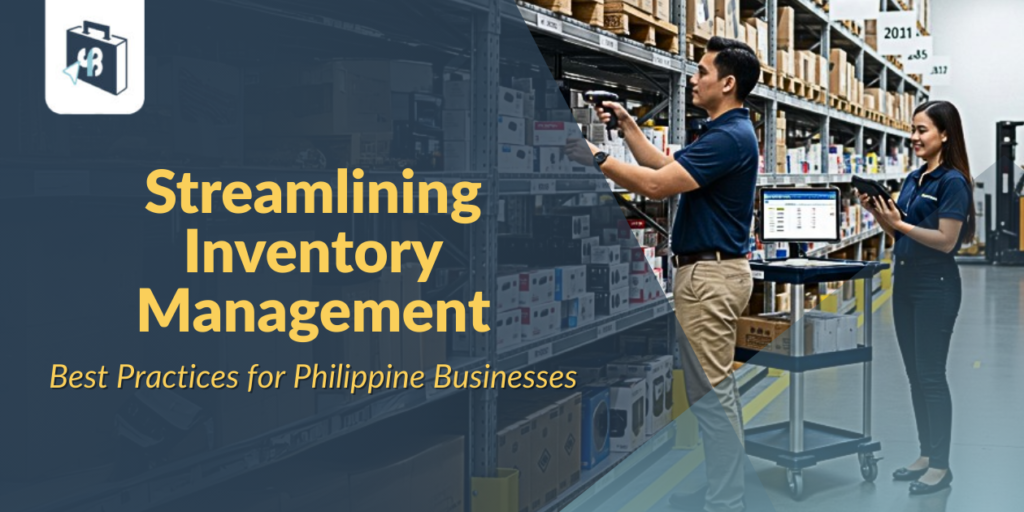
- Barcode Scanning & RFID: Implement barcode scanning for all incoming and outgoing goods. This dramatically reduces human error, speeds up receiving and dispatch, and ensures accurate stock counts. For larger operations, Radio-Frequency Identification (RFID) technology offers even faster and more accurate tracking of items within a warehouse.
- Real-time Updates: Ensure your system updates inventory levels in real-time as sales are made and new stock arrives. This prevents overselling or underselling and provides an accurate basis for reordering.
2. Implement Smart Forecasting Techniques
Guessing is a recipe for disaster. Accurate forecasting is about anticipating future demand based on historical data and market trends.
- Historical Sales Data: Analyze past sales figures to identify patterns, seasonality, and trends. When did certain products sell more? Were there any specific promotions that impacted sales?
- Market Trends and External Factors: Keep an eye on local and global economic conditions, competitor activities, and emerging consumer preferences. Are there new regulations or technologies that might affect product demand? In the Philippines, this might include anticipating demand for school supplies before the academic year or holiday-specific items.
- Collaboration with Sales & Marketing: Your sales and marketing teams have invaluable insights into customer needs and upcoming promotions. Regularly collaborate with them to fine-tune your forecasts.
- Demand Planning Software: While advanced, some IMS or ERPs offer demand planning modules that use algorithms to predict future demand with greater accuracy.
3. Adopt a Strategic Stocking Approach
Not all products are created equal. Your stocking strategy should reflect this.
- ABC Analysis: Categorize your inventory based on value and importance:
- A-items (High Value, Low Quantity): These are your most valuable products, typically representing a small percentage of your total items but a large percentage of your inventory value (e.g., high-end electronics, luxury goods). They require tight control, frequent review, and accurate forecasting.
- B-items (Medium Value, Medium Quantity): Important but less critical than A-items.
- C-items (Low Value, High Quantity): These are your high-volume, low-cost items (e.g., nuts and bolts, basic office supplies). They can be managed with simpler reorder points.
- Just-In-Time (JIT) Inventory: While challenging in the Philippines due to logistics, the JIT philosophy aims to receive goods only as they are needed, minimizing holding costs. This requires strong supplier relationships and reliable transportation. It’s often more feasible for components in manufacturing or high-turnover items with very stable demand.
- Safety Stock: Always maintain a small buffer of safety stock to guard against unexpected demand spikes or supply chain disruptions. The ideal amount depends on lead times, demand variability, and the cost of a stock-out.
- Reorder Points and Economic Order Quantity (EOQ):
- Reorder Point: The specific inventory level at which a new order should be placed. It considers lead time and daily usage.
- EOQ: A formula to calculate the optimal order quantity that minimizes total inventory costs (holding costs + ordering costs).
4. Optimize Your Warehouse Layout and Processes
Even the best software can’t fix a chaotic physical space.
- Logical Layout: Organize your warehouse to minimize travel time for picking and packing. Group frequently purchased items together. Ensure clear labeling for all storage locations.
- Efficient Receiving and Put-away: Establish clear procedures for checking in new inventory, verifying quantities against purchase orders, and quickly moving goods to their designated storage locations.
- Regular Cycle Counting vs. Annual Physical Inventory: Instead of disruptive annual inventory counts, implement cycle counting – counting a small portion of inventory regularly. This allows you to identify discrepancies and correct them continuously, leading to more accurate stock records throughout the year.
5. Cultivate Strong Supplier Relationships
Your inventory is only as good as your supply chain. In the Philippines, where local suppliers are key, nurturing these relationships is paramount.
- Clear Communication: Maintain open lines of communication regarding order forecasts, potential delays, and quality expectations.
- Reliability and Responsiveness: Prioritize suppliers known for their reliability, consistent quality, and ability to respond quickly to your needs.
- Negotiate Favorable Terms: Work with suppliers on payment terms, delivery schedules, and minimum order quantities that align with your inventory strategy. Building trust can often lead to more flexible arrangements.
6. Address Obsolete and Slow-Moving Inventory
Unmoved stock is a drain on resources.
- Identify and Analyze: Regularly review your inventory to identify items with low turnover or no sales over a prolonged period.
- Strategize for Disposal: Once identified, create a plan:
- Discounts/Promotions: Offer special deals, bundles, or liquidate through sales events.
- Returns to Supplier: If possible, negotiate returns with your supplier.
- Donation: Consider donating to charities for tax benefits (if applicable).
- Scrapping: As a last resort, if items have no value.
- Learn from Mistakes: Understand why these items became obsolete to avoid similar issues in the future. Was it poor forecasting, a change in market trends, or a quality issue?
Implementing Inventory Management in the Philippine Context: Tips for Success
- Start Small, Scale Up: Don’t try to overhaul everything at once. Begin by implementing one or two key practices, like barcode scanning for high-value items, and gradually expand.
- Train Your Team: Your people are your greatest asset. Ensure your procurement, warehouse, and sales teams are well-trained on new systems and processes. Their buy-in is crucial.
- Embrace Local Logistics Partners: Develop strong relationships with local couriers and logistics providers who understand the nuances of delivery across different regions in the Philippines.
- Be Flexible: The Philippine business environment can be unpredictable. Be prepared to adapt your inventory strategy to unexpected events.
- Focus on Cash Flow: Always consider the cash flow implications of your inventory decisions. Balancing stock levels with your working capital is key for sustained financial health.
The Payoff: More Than Just Organized Shelves
Streamlining inventory management is an ongoing journey, not a one-time fix. But the effort pays off handsomely:
- Increased Profitability: By reducing holding costs, minimizing waste, and preventing stock-outs, you directly boost your bottom line.
- Improved Cash Flow: Less capital tied up in inventory means more liquid cash for investment and operational needs.
- Enhanced Customer Satisfaction: Meeting demand consistently leads to happier customers and stronger brand loyalty.
- Greater Efficiency: Optimized processes free up your team to focus on higher-value tasks.
- Better Decision-Making: Real-time data provides the insights needed for strategic planning and growth.
For business owners, procurement and finance teams, and every entrepreneur striving for success in the Philippines, taking control of your inventory isn’t just about managing stock – it’s about building a more resilient, profitable, and future-ready business. Start today, and watch your business thrive!