Every IT manager in the Philippines has lived through this: a new hire starts Monday, and nobody ordered their laptop. Cue the frantic Viber messages, the emergency purchase at a retail store with no BIR receipt, and the finance team’s inevitable frustration. The truth is, most companies don’t have a broken laptop procurement process: they have no process at all. They rely on ad hoc purchases, scattered vendors, and spreadsheets that nobody updates. That pattern works fine when you have ten employees. At fifty or a hundred, it becomes a genuine operational drag, eating hours of admin time and inflating costs by 15-25% compared to organizations with structured buying workflows. If your company is scaling in the Philippines, whether you’re a BPO, an eCommerce brand, or an enterprise team, getting your hardware purchasing right will save you real money and real headaches. Here’s how to build a procurement system for laptops that actually works.
Assessing Organizational Hardware Requirements
Before you talk to a single vendor, you need clarity on what your people actually need. Most companies skip this step and end up buying the same mid-range laptop for everyone, which means developers are frustrated by slow builds and accounting staff are carrying machines with specs they’ll never use.
Defining User Personas and Performance Tiers
Start by grouping your employees into three or four personas based on workload. A call center agent running a browser-based CRM needs very different hardware than a video editor or a data analyst running Python scripts on large datasets. A practical framework looks like this:
- Light users (admin, HR, basic office apps): Intel i5 or AMD Ryzen 5, 8GB RAM, 256GB SSD
- Standard users (project managers, sales, general knowledge workers): Intel i5/Ryzen 5, 16GB RAM, 512GB SSD
- Power users (developers, designers, data teams): Intel i7/Ryzen 7, 32GB RAM, 1TB SSD, dedicated GPU
- Executive/mobile users: lightweight ultrabooks with long battery life, similar specs to standard tier
Mapping these personas upfront prevents the two most common mistakes: overspending on hardware nobody needs and underspending on hardware that bottlenecks productivity.
Standardizing Specifications to Reduce Complexity
Once you have your tiers, lock them down. Standardization is the single biggest cost-saver in laptop procurement because it gives you negotiating power with vendors, simplifies your spare parts inventory, and makes IT support dramatically easier. Aim for no more than three to four approved models across your organization. When someone requests a device outside the standard list, require a written justification and manager approval. This isn’t bureaucracy for its own sake: it’s how you keep costs predictable and support manageable.
Optimizing Vendor Selection and Relationship Management
Your choice of vendor shapes everything from unit pricing to warranty turnaround times. Too many Philippine companies default to whoever offers the lowest sticker price without considering total cost of ownership.
Evaluating Direct Manufacturers vs. Value-Added Resellers
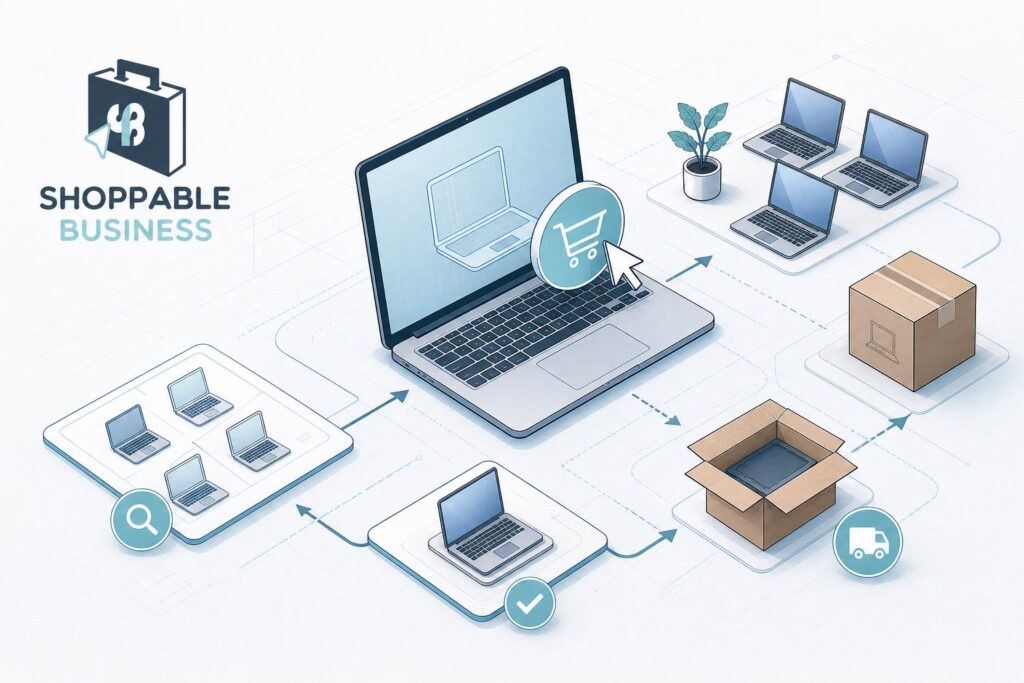
Buying directly from manufacturers like Lenovo or Dell can get you better per-unit pricing on large orders, but it often means managing importation, customs, and warranty claims yourself. Value-added resellers and procurement platforms handle those logistics for you. Platforms like Shoppable Business, for example, act as a single supplier on record, handling sourcing, importation, and even warranty claim processing. That consolidation matters when your finance team needs BIR-certified sales invoices for every transaction and your operations team doesn’t want to track shipments from five different suppliers.
Negotiating Bulk Discounts and Service Level Agreements
If you’re ordering 50 or more units per year, you should be negotiating. Push for volume-based pricing tiers, extended warranty terms, and guaranteed delivery windows. A good service level agreement should specify maximum delivery lead times (14 business days is a reasonable benchmark in the Philippines for non-custom configurations), replacement unit policies for DOA devices, and escalation paths for warranty disputes. Get these terms in writing. Verbal promises from sales reps have a funny way of disappearing when something goes wrong.
Automating the Approval and Ordering Workflow
Manual procurement is slow and error-prone. Every email chain and approval form that sits in someone’s inbox adds days to your cycle time.
Implementing Self-Service Procurement Portals
The best approach for growing companies is a self-service portal where managers can select from pre-approved device tiers, submit requests, and track order status without pinging IT or operations. This reduces back-and-forth by 60-70% in most organizations. Shoppable Business offers a centralized platform that gives teams spending visibility and keeps purchases aligned with company policies, which solves the common problem of departments going rogue with unauthorized purchases.
Integrating Procurement Software with Accounting Systems
Your procurement tool should talk to your accounting system. If it doesn’t, someone is manually re-entering purchase orders, matching invoices, and reconciling payments. That’s a waste of skilled labor. Look for platforms that export transaction data in formats compatible with your ERP or accounting software, whether that’s SAP, NetSuite, QuickBooks, or Xero. The goal is a clean audit trail from request to delivery to payment, with no manual data entry in between.
Modernizing Deployment with Zero-Touch Provisioning
Getting the laptop to the employee’s desk is only half the battle. The other half is getting it configured and ready to use without requiring an IT technician to physically touch every machine.
Leveraging Autopilot and MDM Solutions
Windows Autopilot and Apple Business Manager (for Mac environments) allow IT teams to pre-configure devices so they’re enrollment-ready out of the box. The employee powers on the laptop, connects to Wi-Fi, signs in with their corporate credentials, and the device automatically installs company apps, security policies, and VPN configurations. For companies with 100+ employees, this approach cuts provisioning time from 2-3 hours per device down to about 20 minutes of passive setup. Pair this with a mobile device management solution like Microsoft Intune or Jamf, and you can enforce security compliance remotely without ever touching the hardware.
Reducing IT Overhead through Drop-Shipping
If your workforce is distributed across the Philippines or includes remote employees, drop-shipping configured laptops directly to end users eliminates the need for a central staging area. This is where an end-to-end procurement partner earns its keep: they handle sourcing, shipping logistics, and last-mile delivery while your IT team manages configuration remotely through MDM. The result is that a new hire in Cebu or Davao gets their laptop at the same speed as someone sitting in your BGC office.
Managing Lifecycle and Asset Tracking
A laptop doesn’t stop costing money after you buy it. Warranty management, refresh planning, and end-of-life disposal all carry real financial and compliance implications.
Tracking Warranty Status and Refresh Cycles
Most business laptops carry a three-year warranty, and performance degradation typically becomes noticeable around year three or four. Build a simple asset register (even a well-maintained spreadsheet works for companies under 200 devices) that tracks purchase date, warranty expiration, assigned user, and device condition. Set calendar reminders 90 days before warranty expiration so you can decide whether to extend coverage or begin planning replacements. A staggered refresh cycle, where you replace roughly one-third of your fleet each year, spreads capital expenditure evenly and prevents the painful scenario of needing to replace everything at once.
Establishing Sustainable E-Waste and Trade-In Programs
The Philippines has strengthened its e-waste regulations over the past few years, and improper disposal of electronic equipment carries real penalties. Partner with certified e-waste recyclers or explore trade-in programs that offset the cost of new purchases. Some procurement platforms facilitate trade-ins as part of their lifecycle services, giving you credit toward new orders while ensuring compliant disposal. Beyond compliance, a visible sustainability program is increasingly important for attracting talent, particularly among younger professionals who care about their employer’s environmental practices.
Measuring Success through Procurement Metrics
You can’t improve what you don’t measure. Track these five metrics quarterly to gauge whether your procurement process for laptops is actually working:
- Average cycle time: days from request submission to device delivery. Target under 10 business days for standard configurations.
- Cost per device by tier: compare against market benchmarks. If you’re paying more than 10% above the volume price for your tier, renegotiate.
- Maverick spend rate: the percentage of purchases made outside your approved process. Anything above 5% signals a policy enforcement problem.
- First-day readiness rate: the percentage of new hires who have a fully configured laptop on their start date. Aim for 95%+.
- Warranty claim resolution time: average days from claim submission to resolution. This reflects your vendor’s actual service quality, not their promises.
Review these numbers with your finance and operations leads every quarter. Trends matter more than individual data points: a rising cycle time might indicate vendor delivery issues, while increasing maverick spend could mean your approved catalog doesn’t meet user needs.
The companies that treat laptop procurement as a strategic function rather than an administrative chore consistently spend less, deploy faster, and keep their teams productive. The building blocks are straightforward: define what you need, standardize your catalog, pick the right vendor partner, automate approvals, and track your results. If you’re a growing business in the Philippines looking to simplify this entire workflow, Shoppable Business offers a Procurement as a Service model with flexible payment terms, authentic products, and full supply chain support from sourcing through delivery. Start building your procurement process today: your future self (and your finance team) will thank you.