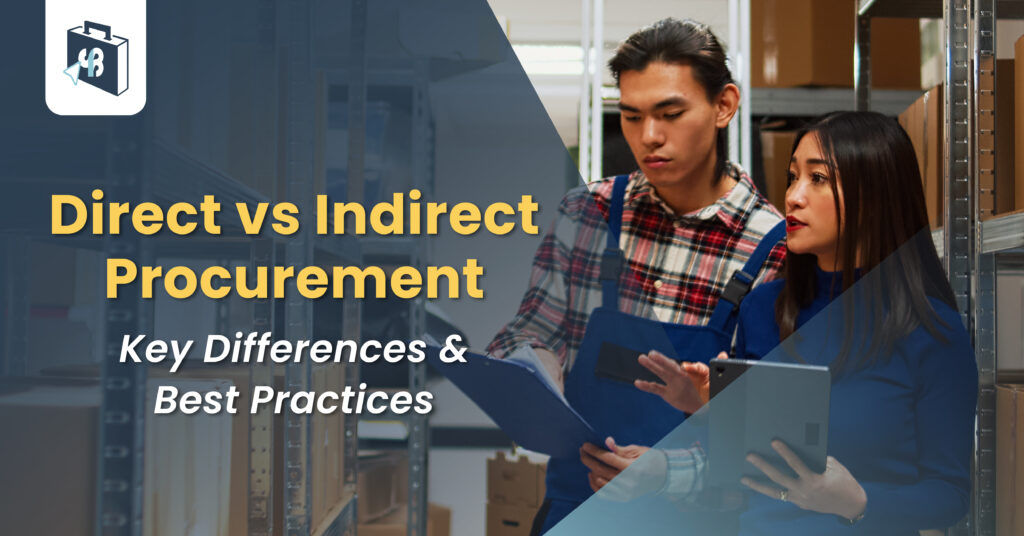
Procurement plays a crucial role in driving business performance, from ensuring supply chain continuity to reducing costs. Yet, when it comes to understanding direct vs indirect procurement, many organizations struggle to differentiate between the two. Both types of procurement are vital, but they serve different purposes, follow unique strategies, and demand distinct management approaches. In this comprehensive guide, we’ll unpack their definitions, differences, impacts, and how to optimize both for efficiency and profitability.
What Is Direct Procurement
Direct procurement involves purchasing goods, materials, or components that directly affect an organization’s production or service offering. These are typically items required to create, assemble, or deliver your core product or service.
Examples of Direct Procurement: raw materials such as metals, fabrics, or chemicals; manufacturing components like chips, screws, or assembly parts; packaging materials; and inventory or goods for resale.
Key Characteristics of Direct Procurement:
- Impact on Operations: Direct procurement directly affects production timelines and revenue generation.
- Supplier Relationships: Typically long-term and strategic because consistency and quality are vital.
- Procurement Cycle: Often planned well in advance to support production schedules and forecasting.
A disruption in direct procurement—such as a supplier issue or shipment delay—can halt production and directly impact customer satisfaction.
What Is Indirect Procurement
Indirect procurement involves purchasing goods and services that support the organization’s operations but are not part of the final product or service delivered to the customer.
Examples of Indirect Procurement: office supplies and furniture, software subscriptions and IT licenses, marketing and consultancy services, utilities, maintenance, and travel arrangements.
Key Characteristics of Indirect Procurement:
- Business Support Role: Indirect procurement sustains internal business operations.
- Decentralized Decisions: Often managed by department heads or administrative teams.
- Supplier Model: Usually involves a wide variety of suppliers and short-term contracts.
While indirect procurement doesn’t generate direct revenue, it significantly influences employee productivity, brand efficiency, and overall operational cost control.
Direct vs Indirect Procurement: Understanding the Differences
| Aspect | Direct Procurement | Indirect Procurement |
|---|---|---|
| Definition | Purchases tied to core product or service | Purchases supporting operational needs |
| Budget Ownership | Managed by operations or production teams | Managed by finance, HR, or admin |
| Supplier Relationship | Strategic, long-term partnerships | Transactional, varied, short-term |
| Impact of Delay | Can stop production lines and affect revenue | May cause inconvenience but rarely halt business |
| Focus Area | Cost, quality, and supply chain reliability | Cost efficiency and process optimization |
Understanding these differences helps organizations apply the correct policies, governance, and technology to manage each procurement type efficiently.
Why the Distinction Matters
The distinction between direct and indirect procurement is not just technical—it’s strategic. Companies that fail to differentiate the two often blur budgets, duplicate processes, and lose negotiating power.
Benefits of Managing Both Separately:
- Increased spend visibility: Categorizing spend improves cost tracking and helps identify savings.
- Smarter supplier management: Engaging the right mix of strategic vs tactical suppliers.
- Greater efficiency: Each procurement type requires custom workflows, tools, and KPIs.
- Improved risk management: Separate governance allows better compliance and reduced disruptions.
When procurement is managed strategically, it becomes a key enabler of growth, not just a cost center.
How Digital Transformation Is Changing Procurement
With the rise of AI and automation, both direct and indirect procurement are evolving rapidly. AI-driven procurement platforms now help organizations analyze large data sets, identify savings, predict supplier risks, and optimize sourcing decisions.
Key AI-Driven Applications:
- Predictive analytics: Identify spend patterns and forecast demand.
- Supplier risk monitoring: Detect financial or operational red flags early.
- Contract optimization: AI can analyze terms, flag renewals, and identify opportunities for renegotiation.
- Process automation: Streamline purchase orders, invoicing, and supplier onboarding.
Digitalization bridges the gap between direct and indirect procurement, fostering real-time collaboration and transparency across departments.
Building a Balanced Procurement Strategy
To harness both procurement categories effectively, organizations should structure their procurement strategy around three pillars: visibility, collaboration, and optimization.
- Improve Spend Visibility:
Use procurement analytics and dashboards to categorize direct and indirect expenditures. Perform regular spend analysis to identify overlapping contracts and supplier redundancies. - Enhance Supplier Collaboration:
Build long-term partnerships with key direct suppliers. Consolidate and evaluate indirect suppliers regularly to optimize costs. Include sustainability and ESG performance in supplier metrics. - Optimize with Technology Integration:
Adopt unified procurement platforms that provide end-to-end visibility. Integrate ERP and supplier management tools for seamless data flow. Use e-sourcing tools for competitive bidding, especially in indirect procurement. - Train and Empower Procurement Teams:
Procurement professionals should understand the distinct priorities of both procurement types. Cross-functional training fosters better decision-making, cost awareness, and strategic alignment.
Metrics to Measure Procurement Success
Whether evaluating direct or indirect procurement, well-defined KPIs ensure continuous improvement.
Recommended KPIs:
- Cost savings achieved per category
- Supplier performance (quality, delivery, compliance)
- Procurement cycle time
- Contract renewal/negotiation success rate
- Stakeholder satisfaction levels
Using data-driven insights ensures procurement teams operate strategically, not reactively.
The Role of Sustainable Procurement
Procurement strategies are increasingly tied to sustainability. Both direct and indirect procurement can drive ESG initiatives when aligned with ethical sourcing and resource optimization.
Direct Procurement Focus: Responsible sourcing of raw materials, supplier diversity, and eco-friendly production.
Indirect Procurement Focus: Sustainable office supplies, reduced travel, and energy-efficient technology adoption.
A sustainability-oriented procurement approach not only benefits the environment but also enhances brand reputation and long-term viability.
Conclusion: Turning Procurement into a Growth Engine
In today’s competitive environment, understanding the difference between direct and indirect procurement gives companies a strategic edge. Direct procurement ensures product quality and customer satisfaction, while indirect procurement keeps operations running efficiently. Together, they form the foundation of a resilient, cost-effective, and sustainable business model.
However, managing procurement effectively takes more than knowledge — it requires the right technology to unify processes, increase visibility, and automate time-consuming tasks.
That’s where Shoppable comes in.
Shoppable helps organizations streamline procurement workflows by centralizing sourcing, vendor management, and approvals in one intuitive platform. Whether you’re managing direct procurement for raw materials or indirect procurement for office operations, Shoppable empowers procurement teams with smart insights, spend visibility, and automated purchasing — leading to stronger supplier relationships and measurable savings.
By investing in digital tools like Shoppable, strengthening supplier relations, and differentiating procurement processes, organizations can transform procurement from a transactional function into a strategic growth enabler — driving innovation, profitability, and sustainable success.
👉 Learn how Shoppable can modernize your procurement process and help you gain better control over your direct and indirect spending needs. https://shoppable.ph/procurement-as-a-service-philippines/
FAQ Section
What is the main difference between direct and indirect procurement?
Direct procurement involves goods directly tied to production, while indirect procurement supports internal business operations.
What are examples of direct and indirect procurement?
Examples of direct procurement include raw materials, hardware components, and packaging. Examples of indirect procurement include office supplies, utilities, consulting, software, and facility management services.
How can AI improve procurement processes?
AI enhances procurement by automating repetitive tasks, predicting demand fluctuations, identifying supplier risks, optimizing pricing, and improving data-driven decision-making across both direct and indirect procurement.
What are common challenges in managing direct procurement?
Challenges include supplier dependency, fluctuating raw material costs, supply chain disruptions, and the need for consistent quality control across multiple suppliers.
What are common challenges in managing indirect procurement?
These include uncontrolled spend across departments, lack of centralized contracts, minimal cost visibility, and inefficient approval workflows.
How can companies optimize indirect procurement?
Organizations can optimize indirect procurement by centralizing supplier databases, implementing e-procurement tools, setting spend policies, and automating purchase approvals.